AboutProceduresReviewsInsuranceFormsContactCall 817.922.9229

Procedure Guide

Thyroidectomy

Thyroidectomy is the surgical removal of part or all of the thyroid gland. It is performed to treat thyroid nodules, goiter (enlarged thyroid), hyperthyroidism, and thyroid cancer. The procedure may involve removing one lobe (hemithyroidectomy) or the entire gland (total thyroidectomy) depending on the diagnosis.

Treats nodules, goiter, and thyroid cancerPartial or total thyroid removalTypically 1–2 night hospital stayMost patients home within 24 hours
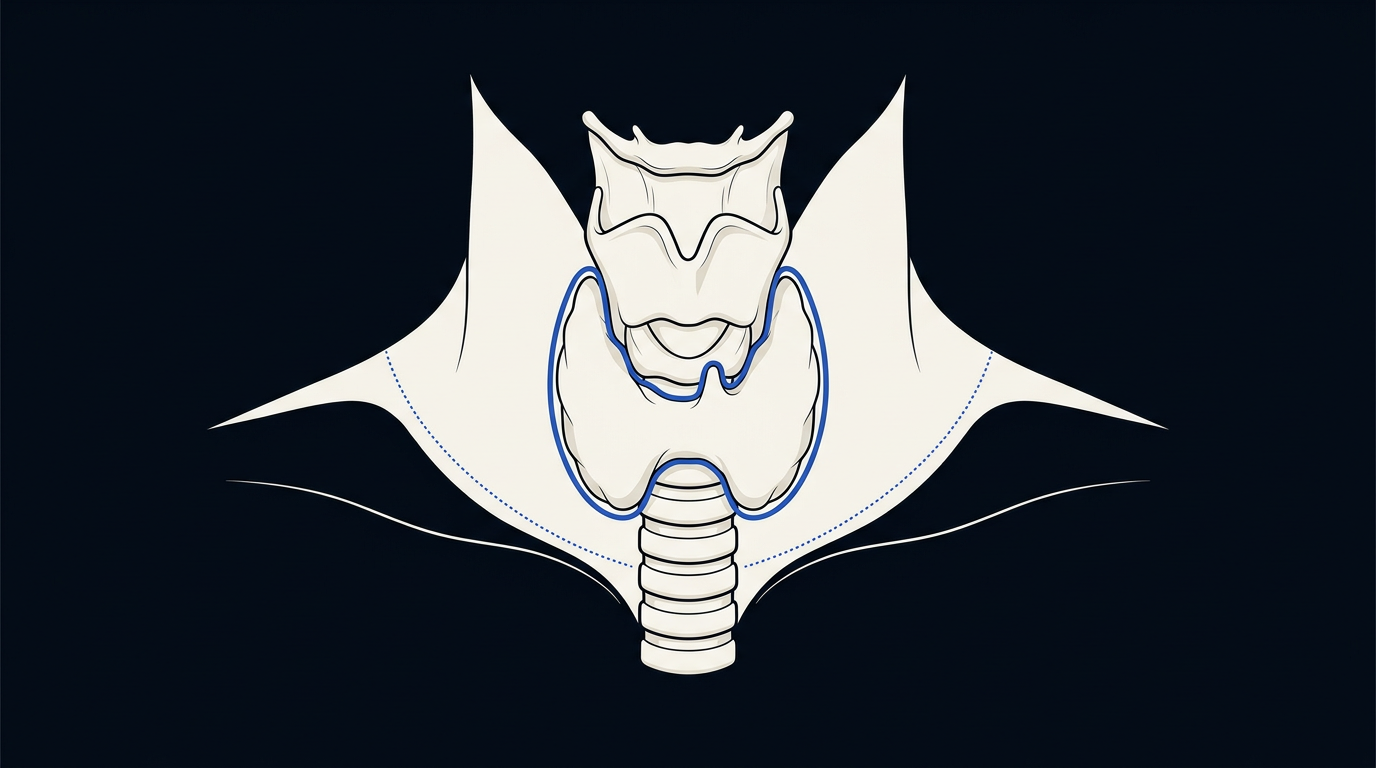
Medical illustration of thyroidectomy showing the thyroid gland in the neck and surgical removal approach

Quick Guide

Conditions

Nodules, goiter, cancer, hyperthyroidism

Types

Hemithyroidectomy or total thyroidectomy

Approach

Cervical incision (neck)

Recovery

1–2 weeks to normal activity

Patient-First Note

The thyroid is a small but important gland that regulates metabolism. When surgery is recommended, the goal is to remove the diseased tissue while preserving as much normal function as possible. Most patients recover well and return to normal activity within one to two weeks.

What It Is

Removing part or all of the thyroid

The thyroid is a butterfly-shaped gland in the front of the neck that produces hormones regulating metabolism, energy, and body temperature. Thyroidectomy removes diseased or abnormal thyroid tissue.

Why It's Done

Nodules, cancer, and gland enlargement

Surgery may be recommended for suspicious or cancerous nodules, a goiter causing compression symptoms (difficulty swallowing or breathing), hyperthyroidism not controlled by medication, or multinodular thyroid disease.

Partial vs. Total

How much is removed depends on the diagnosis

A hemithyroidectomy removes one lobe and is often sufficient for isolated nodules. Total thyroidectomy removes the entire gland and is typically required for thyroid cancer, bilateral disease, or large goiters.

Hormone Replacement

After total thyroidectomy

Patients who undergo total thyroidectomy will need lifelong thyroid hormone replacement medication. After hemithyroidectomy, the remaining lobe often produces enough hormone on its own.

Indications

When thyroid surgery is recommended

Surgery is typically recommended when a thyroid nodule is suspicious or confirmed as cancer on biopsy (fine needle aspiration), when the thyroid is enlarged enough to cause compressive symptoms like difficulty swallowing or breathing, or when hyperthyroidism is not adequately managed with medication.

The decision between partial and total thyroidectomy is based on the biopsy results, imaging findings, nodule characteristics, and whether the disease affects one or both lobes of the thyroid.

  • Suspicious or cancerous thyroid nodule
  • Enlarging goiter with compressive symptoms
  • Hyperthyroidism not controlled by medication
  • Multinodular thyroid disease

Procedure

How thyroidectomy is performed

Thyroidectomy is performed through a small horizontal incision in the lower neck, typically placed in a natural skin crease to minimize visible scarring. The surgeon carefully identifies and preserves the recurrent laryngeal nerves (which control the vocal cords) and the parathyroid glands (which regulate calcium).

The thyroid tissue is dissected from surrounding structures and removed. The incision is closed with sutures and the scar typically heals well due to its location along a natural skin fold.

How Care Is Planned

Treatment is based on your symptoms, exam, and the condition.

Hemithyroidectomy

Removing one lobe

Appropriate for isolated nodules confined to one side. Preserves the opposite lobe, and most patients do not require thyroid hormone replacement afterward.

Total Thyroidectomy

Removing the entire gland

Required for thyroid cancer, bilateral disease, or large goiters. Patients will take daily thyroid hormone replacement medication, which is well-tolerated and easily managed.

Observation

Monitoring when surgery is not yet needed

Small, benign-appearing nodules may be monitored with periodic ultrasound and repeat biopsy if indicated. Not all thyroid nodules require surgery.

Recovery Timeline

What recovery may look like.

Step 1

Before surgery

Evaluation includes thyroid ultrasound, fine needle aspiration biopsy, and blood work (thyroid function, calcium levels). Results guide the surgical plan.

Step 2

Procedure day

Thyroidectomy typically takes one to two hours. Most patients stay overnight for monitoring of calcium levels and are discharged the following day.

Step 3

First week

Mild neck soreness and stiffness are normal. Most patients manage discomfort with over-the-counter pain relief and return to light activity within a few days. The incision is kept clean and dry.

Step 4

Full recovery

Most patients return to normal activity within one to two weeks. Thyroid hormone levels are checked at follow-up and medication is adjusted as needed. The neck scar fades significantly over several months.

Common Questions

Answers patients often want before scheduling.

Will I have a visible scar?

The incision is placed in a natural skin crease in the lower neck and is typically 3 to 5 centimeters long. It heals well in most patients and becomes significantly less visible over time.

Will I need to take medication after surgery?

After total thyroidectomy, you will need daily thyroid hormone replacement (levothyroxine). After hemithyroidectomy, most patients do not need medication because the remaining lobe produces sufficient hormone.

What are the risks of thyroid surgery?

The main risks are injury to the recurrent laryngeal nerve (which can affect voice) and damage to the parathyroid glands (which can cause low calcium). These risks are minimized by careful surgical technique and are uncommon in experienced hands.

How long will I be in the hospital?

Most patients stay overnight and go home the next day. Calcium levels are monitored after total thyroidectomy to ensure the parathyroid glands are functioning properly before discharge.

Consultation

Talk through your symptoms and next steps.

Call our office to schedule an evaluation with Dr. Bayouth. This page is educational and should not replace personal medical advice.