AboutProceduresReviewsInsuranceFormsContactCall 817.922.9229

Procedure Guide

Adrenalectomy

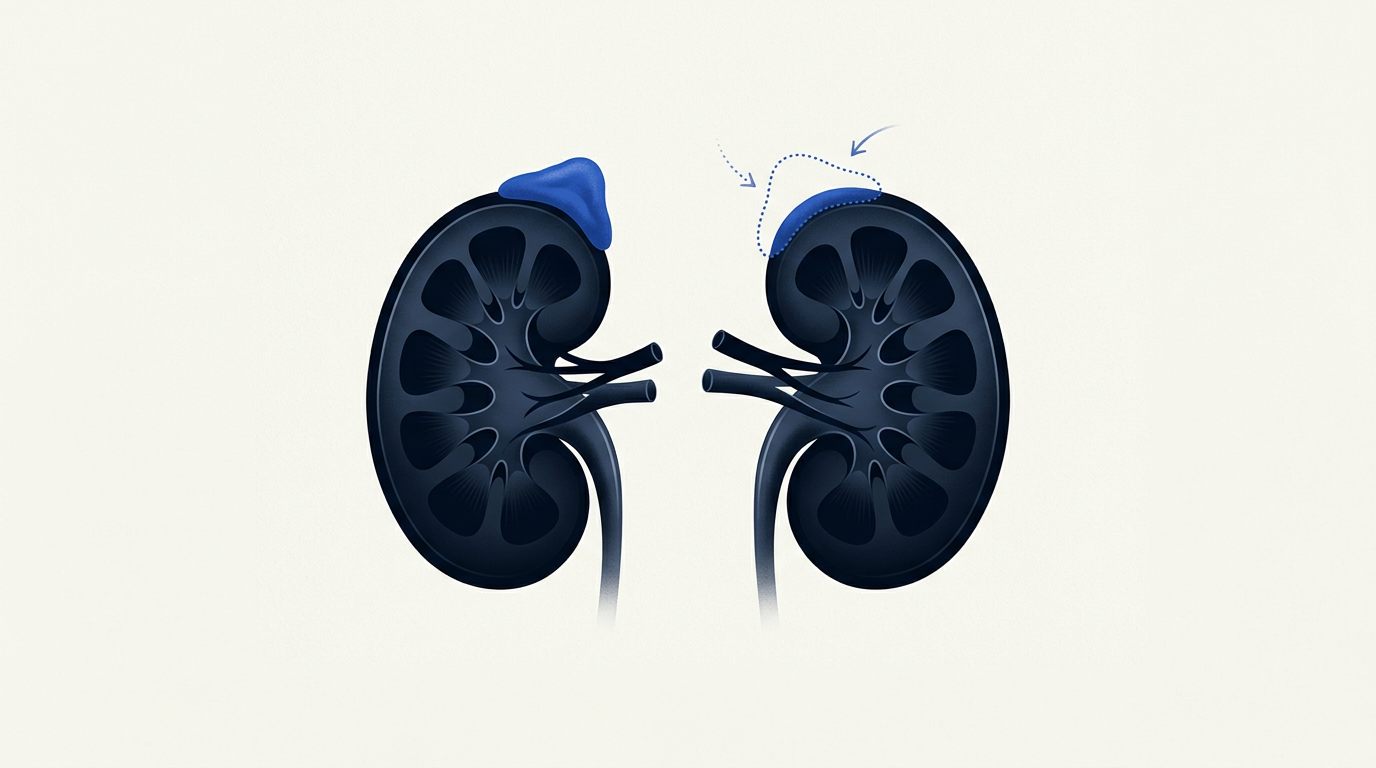
Adrenalectomy is the surgical removal of one or both adrenal glands. The adrenal glands sit on top of each kidney and produce essential hormones including cortisol, aldosterone, and adrenaline. Surgery is performed when an adrenal tumor is producing excess hormones, is suspicious for cancer, or has grown large enough to warrant removal.

Treats hormone-producing adrenal tumorsLaparoscopic or robotic approachTypically 1–2 night hospital stayOften curative for hormonal conditions
Medical illustration of adrenalectomy showing the adrenal gland on top of the kidney and laparoscopic surgical removal

Quick Guide

Conditions

Adrenal tumors, Cushing's, pheochromocytoma, Conn's

Approach

Laparoscopic or robotic (most cases)

Hospital Stay

1–2 nights typical

Recovery

2–4 weeks to normal activity

Patient-First Note

Most adrenal tumors are benign, but some produce excess hormones that cause significant health problems. Surgery to remove the affected gland is often curative. Dr. Bayouth will review your imaging and lab results to determine whether adrenalectomy is appropriate.

What It Is

Removing an adrenal gland

The adrenal glands are small, triangular organs that sit on top of each kidney. They produce hormones critical for blood pressure regulation, stress response, and metabolism. Adrenalectomy removes one (or rarely both) of these glands.

Why It's Done

Tumors that produce excess hormones

The most common reason for adrenalectomy is a functioning adrenal tumor — one that produces too much cortisol (Cushing's syndrome), aldosterone (Conn's syndrome), or catecholamines (pheochromocytoma). Non-functioning tumors may also be removed if they are large or have suspicious features.

Laparoscopic

Minimally invasive is the standard

The majority of adrenalectomies are performed laparoscopically through small incisions. This approach offers less pain, shorter hospital stays, and faster recovery compared to open surgery.

Living With One

One adrenal gland is sufficient

After removing one adrenal gland, the remaining gland compensates fully. Most patients do not require long-term hormone replacement after unilateral adrenalectomy, though temporary supplementation may be needed.

Indications

When adrenal surgery is recommended

Surgery is recommended for adrenal tumors that produce excess hormones and cause clinical syndromes — including Cushing's syndrome (excess cortisol), Conn's syndrome / primary hyperaldosteronism (excess aldosterone), and pheochromocytoma (excess catecholamines causing severe hypertension).

Adrenalectomy may also be recommended for non-functioning tumors larger than 4 centimeters, tumors with imaging characteristics suspicious for malignancy (adrenocortical carcinoma), or tumors that are growing on serial imaging.

  • Hormone-producing adrenal tumor
  • Tumor larger than 4 cm
  • Imaging features suspicious for cancer
  • Growing tumor on repeat scans

Procedure

How adrenalectomy is performed

Laparoscopic adrenalectomy is performed through three to four small incisions, typically using a lateral (side) approach with the patient positioned on their side. The adrenal gland is carefully dissected from the kidney and surrounding structures, its blood supply is controlled, and the gland is removed.

For large tumors or suspected adrenocortical carcinoma, an open approach with a larger incision may be necessary to ensure complete removal with adequate margins. The surgical approach is tailored to the size, location, and nature of the tumor.

How Care Is Planned

Treatment is based on your symptoms, exam, and the condition.

Laparoscopic

Minimally invasive adrenal removal

The standard approach for most adrenal tumors. Small incisions, shorter hospital stay, and faster recovery. The gland is removed through a lateral approach with the patient on their side.

Robotic-Assisted

Enhanced precision for selected cases

Robotic-assisted adrenalectomy offers additional dexterity and visualization, which may be beneficial for larger tumors or challenging anatomy.

Open Adrenalectomy

For large or malignant tumors

Tumors suspected to be adrenocortical carcinoma or very large tumors may require an open approach to ensure complete resection with clear margins.

Recovery Timeline

What recovery may look like.

Step 1

Before surgery

Pre-operative evaluation includes imaging (CT or MRI), hormonal blood and urine testing, and coordination with endocrinology. Patients with pheochromocytoma require specific blood pressure medication (alpha-blockade) for several weeks before surgery.

Step 2

Procedure day

Laparoscopic adrenalectomy typically takes one to two hours. Most patients stay one to two nights in the hospital. Blood pressure and electrolytes are closely monitored.

Step 3

Early recovery

Mild soreness at the incision sites is typical. Most patients manage pain with oral medication and resume light activity within one week. No heavy lifting over 20 lbs for 6 weeks following surgery.

Step 4

Full recovery

Most patients return to normal activity within two to four weeks. Hormonal levels are monitored at follow-up. Temporary steroid supplementation may be needed if the remaining adrenal gland needs time to resume full function.

Common Questions

Answers patients often want before scheduling.

Can I live with only one adrenal gland?

Yes. The remaining adrenal gland compensates fully in most patients. Long-term hormone replacement is rarely needed after removal of one gland.

What is a pheochromocytoma?

A pheochromocytoma is a tumor of the adrenal medulla that produces excess adrenaline and noradrenaline. It can cause episodes of severe high blood pressure, headache, sweating, and rapid heart rate. Surgical removal is the definitive treatment.

How is adrenal cancer different from a benign tumor?

Adrenocortical carcinoma is rare but aggressive. It is usually suspected based on tumor size (typically larger than 6 cm) and imaging characteristics. Open surgical removal with wide margins is the standard treatment.

Will I need medication after surgery?

Most patients do not need long-term medication after removing one adrenal gland. Patients with Cushing's syndrome may need temporary cortisol replacement as the remaining gland recovers from suppression.

Consultation

Talk through your symptoms and next steps.

Call our office to schedule an evaluation with Dr. Bayouth. This page is educational and should not replace personal medical advice.