AboutProceduresReviewsInsuranceFormsContactCall 817.922.9229

Procedure Guide

Hiatal Hernia Repair

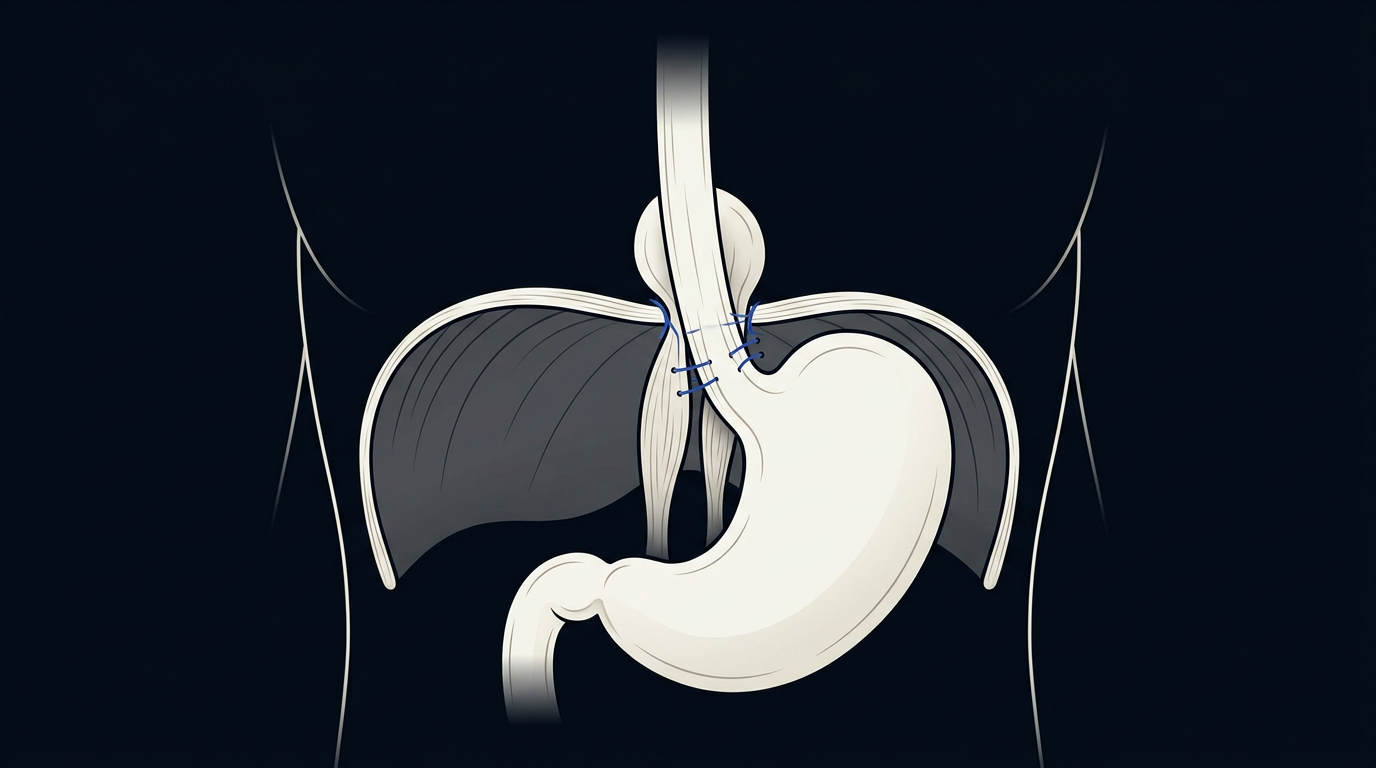
A hiatal hernia occurs when the upper portion of the stomach pushes through the diaphragm into the chest cavity. This can cause acid reflux, chest pain, difficulty swallowing, and a feeling of fullness after eating small amounts.

Upper stomach pushes through the diaphragmOften linked to chronic acid refluxMay cause chest pain or difficulty swallowingRepairable with laparoscopic or robotic surgery
Medical illustration of hiatal hernia repair showing the stomach pushing through the diaphragm and surgical correction

Quick Guide

Location

Diaphragm / upper stomach junction

Common Symptom

Chronic heartburn or reflux

Surgical Approach

Laparoscopic or robotic repair

Often Combined With

Fundoplication (Nissen or Toupet)

Patient-First Note

Many hiatal hernias are manageable without surgery. When symptoms persist despite medication or the hernia is large enough to cause complications, surgical repair may be recommended.

What It Is

A gap in the diaphragm

The diaphragm normally has a small opening (hiatus) for the esophagus to pass through. When this opening weakens or enlarges, part of the stomach can slide upward into the chest.

Types

Sliding vs. paraesophageal

Sliding hiatal hernias are the most common type and often cause reflux. Paraesophageal hernias are less common but can be more serious because the stomach may become trapped.

Symptoms

Heartburn, regurgitation, and chest pressure

Many patients experience worsening acid reflux, difficulty swallowing, chest tightness, or feeling full quickly. Symptoms often worsen after meals or when lying down.

When to Act

Persistent symptoms or large hernias

Surgery is typically considered when medications no longer control symptoms, when the hernia is large, or when there is a risk of the stomach becoming trapped or losing blood supply.

Symptoms

What patients typically experience

The most common symptoms include persistent heartburn, acid reflux that worsens after eating, regurgitation of food or liquid, and a feeling of pressure or fullness in the chest.

Some patients experience difficulty swallowing, chest pain that mimics heart conditions, or shortness of breath. Symptoms often worsen when lying flat or bending over.

  • Chronic heartburn or acid reflux
  • Difficulty swallowing
  • Chest pain or pressure
  • Feeling full quickly after eating

Evaluation

How hiatal hernias are diagnosed

Diagnosis often begins with a discussion of symptoms and a physical exam. We always want at a minimum: an EGD (upper endoscopy), a barium marshmallow swallow study, a pH study, and a motility/manometry study. These tests give us a complete picture of the hernia, acid exposure, and how well the esophagus is functioning.

The EGD allows direct visualization of the hernia and any damage to the esophagus. The barium swallow shows the size and anatomy of the hernia in real time. pH testing measures actual acid exposure, and manometry evaluates the strength and coordination of esophageal contractions — all of which guide the surgical plan.

How Care Is Planned

Treatment is based on your symptoms, exam, and the condition.

Medication

Managing symptoms without surgery

Acid-reducing medications, dietary changes, and lifestyle modifications can control symptoms for many patients. Surgery is reserved for cases where conservative measures are insufficient.

Laparoscopic Repair

Minimally invasive hernia correction

The hernia is reduced, the diaphragm opening is tightened, and the stomach is anchored in its proper position. Often combined with a fundoplication to prevent reflux.

Open Repair

For complex or recurrent cases

Larger hernias, recurrent hernias after prior repair, or complicated cases may require an open surgical approach for reliable correction.

Recovery Timeline

What recovery may look like.

Step 1

Before surgery

Your consultation will review symptoms, imaging findings, and the recommended surgical approach. Diet modifications may be discussed before the procedure.

Step 2

Procedure day

Surgery typically takes two to three hours. Patients stay one night and discharge home the next day. For complex repairs, a barium swallow study may be ordered prior to discharge to ensure everything is healing properly.

Step 3

Early recovery

A modified diet progressing from liquids to soft foods is standard for several weeks. Activity restrictions are minimal for laparoscopic patients.

Step 4

Return to normal

Most patients resume regular activity within two to four weeks. No heavy lifting over 20 lbs for 6 weeks following surgery. Dietary restrictions are gradually lifted based on how healing progresses.

Common Questions

Answers patients often want before scheduling.

Can a hiatal hernia heal on its own?

Hiatal hernias do not resolve on their own, but symptoms can often be managed with medication and lifestyle changes. Surgery is considered when symptoms are persistent, severe, or the hernia is at risk for complications.

Is hiatal hernia repair combined with fundoplication?

Frequently, yes. A fundoplication (Nissen or Toupet) is often performed alongside the hernia repair to help prevent reflux from returning after surgery.

How long is recovery after hiatal hernia surgery?

Most patients return to normal activity within two to six weeks after surgery. Diet progresses gradually from liquids to soft foods and eventually a regular diet over several weeks.

What are the risks of not repairing a large hiatal hernia?

Large hernias can lead to the stomach becoming trapped (incarcerated), losing blood supply (strangulated), or causing chronic anemia from internal bleeding. Early evaluation and planned repair help avoid these serious complications.

Consultation

Talk through your symptoms and next steps.

Call our office to schedule an evaluation with Dr. Bayouth. This page is educational and should not replace personal medical advice.