AboutProceduresReviewsInsuranceFormsContactCall 817.922.9229

Procedure Guide

Colon Surgery

Colon surgery (colectomy) involves removing part or all of the large intestine to treat conditions including diverticulitis, colon cancer, polyps, obstruction, perforation, and inflammatory bowel disease. The approach and extent of resection depend on the specific diagnosis.

Treats cancer, diverticulitis, and obstructionLaparoscopic, robotic, or open approachesPartial or total colectomyExperienced in both emergency and planned cases
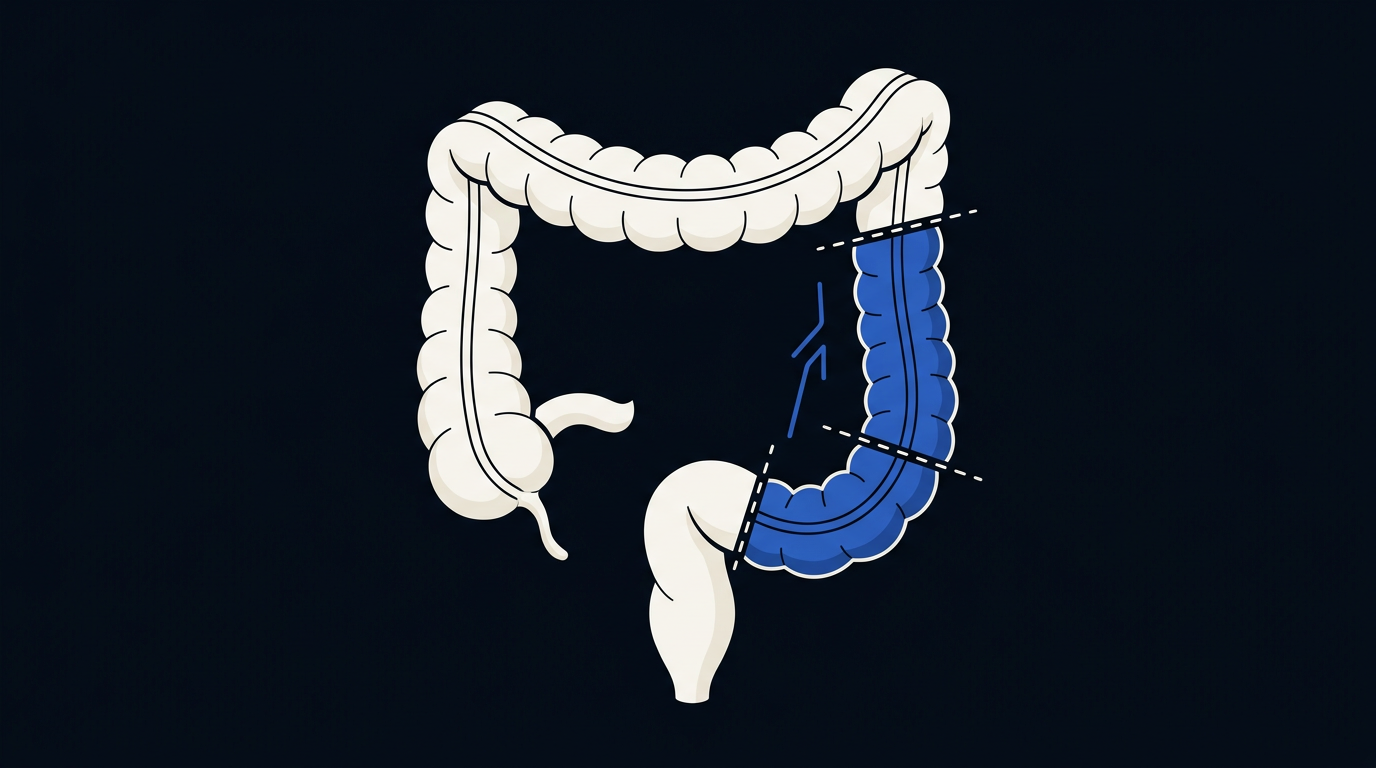
Medical illustration of colon surgery showing the large intestine segments and colectomy approach

Quick Guide

Common Conditions

Diverticulitis, cancer, obstruction

Procedure

Partial or total colectomy

Approaches

Laparoscopic, robotic, or open

Hospital Stay

3–7 days typical

Patient-First Note

Colon surgery is performed for both urgent and planned conditions. Your surgeon will explain the specific procedure, whether minimally invasive surgery is appropriate, and what recovery looks like for your situation.

What It Covers

Surgery on the large intestine

The colon (large intestine) has distinct segments — cecum, ascending, transverse, descending, and sigmoid. The specific segment removed depends on the location of the disease.

Cancer

Colon cancer requires surgical resection

For colon cancer, surgery involves removing the affected segment along with its blood supply and lymph nodes. This is essential for staging and treatment.

Diverticulitis

Repeated episodes may require surgery

Complicated or recurrent diverticulitis — with abscess, perforation, or fistula — may require elective sigmoid colectomy to prevent future episodes.

Emergency

Obstruction, perforation, and bleeding

Colon obstruction, perforation, or massive hemorrhage may require emergency surgery. These situations demand a surgeon comfortable with urgent decision-making.

Indications

When colon surgery is recommended

Planned colon surgery is most commonly performed for colon cancer, large polyps that cannot be removed endoscopically, and complicated diverticular disease. Inflammatory bowel disease (ulcerative colitis, Crohn's) may also require surgery.

Emergency colectomy is performed for perforation, complete obstruction, uncontrolled bleeding, or toxic colitis. The urgency of the situation determines the surgical approach.

  • Colon cancer or large polyps
  • Complicated diverticulitis
  • Bowel obstruction
  • Inflammatory bowel disease complications

Approach

Minimally invasive and open options

Many planned colectomies can be performed laparoscopically or with robotic assistance, offering smaller incisions, less pain, and faster recovery. The oncologic outcomes for laparoscopic colon cancer surgery are equivalent to open surgery.

Emergency cases or extensive disease may require open surgery. The decision is based on the clinical situation, and your surgeon will explain the reasoning.

How Care Is Planned

Treatment is based on your symptoms, exam, and the condition.

Laparoscopic Colectomy

Minimally invasive resection

The affected colon segment is removed through small incisions using a camera and specialized instruments. Oncologic outcomes are equivalent to open surgery with faster recovery.

Robotic-Assisted

Enhanced precision for selected cases

Robotic-assisted colectomy provides additional dexterity and visualization, particularly useful in narrow pelvic spaces or complex anatomic situations.

Open Colectomy

For emergency or complex disease

A larger abdominal incision may be required for emergency cases, bulky tumors, or extensive inflammatory disease. Recovery is typically longer than minimally invasive approaches.

Recovery Timeline

What recovery may look like.

Step 1

Evaluation

Workup includes colonoscopy, CT imaging, and blood work. Cancer staging may require additional imaging. Pre-operative optimization improves outcomes.

Step 2

Surgery

Planned colectomy typically takes three to four hours. Emergency surgery may take longer depending on the findings.

Step 3

Hospital stay

Most patients stay three to seven days. Enhanced recovery protocols including early walking and diet advancement help shorten hospitalization.

Step 4

Recovery

Most patients return to normal activity within four to six weeks. Bowel habits may take several weeks to months to fully normalize.

Common Questions

Answers patients often want before scheduling.

Will I need a colostomy bag?

Most colon surgeries do not require a permanent colostomy. A temporary stoma may be created in certain situations (especially emergency or low rectal cases) and is typically reversed later.

Will my bowel habits change after surgery?

It is common to have more frequent or looser stools initially, especially after right-sided colectomy. This usually improves over weeks to months as the remaining colon adapts.

Can colon surgery be done laparoscopically for cancer?

Yes. Large studies have shown that laparoscopic colectomy for colon cancer provides equivalent cancer outcomes with the benefits of smaller incisions and faster recovery.

How soon can I eat after colon surgery?

Most patients begin a liquid diet within one to two days and advance as tolerated. Enhanced recovery protocols encourage early return to eating.

Consultation

Talk through your symptoms and next steps.

Call our office to schedule an evaluation with Dr. Bayouth. This page is educational and should not replace personal medical advice.