AboutProceduresReviewsInsuranceFormsContactCall 817.922.9229

Procedure Guide

Nissen & Toupet Fundoplication

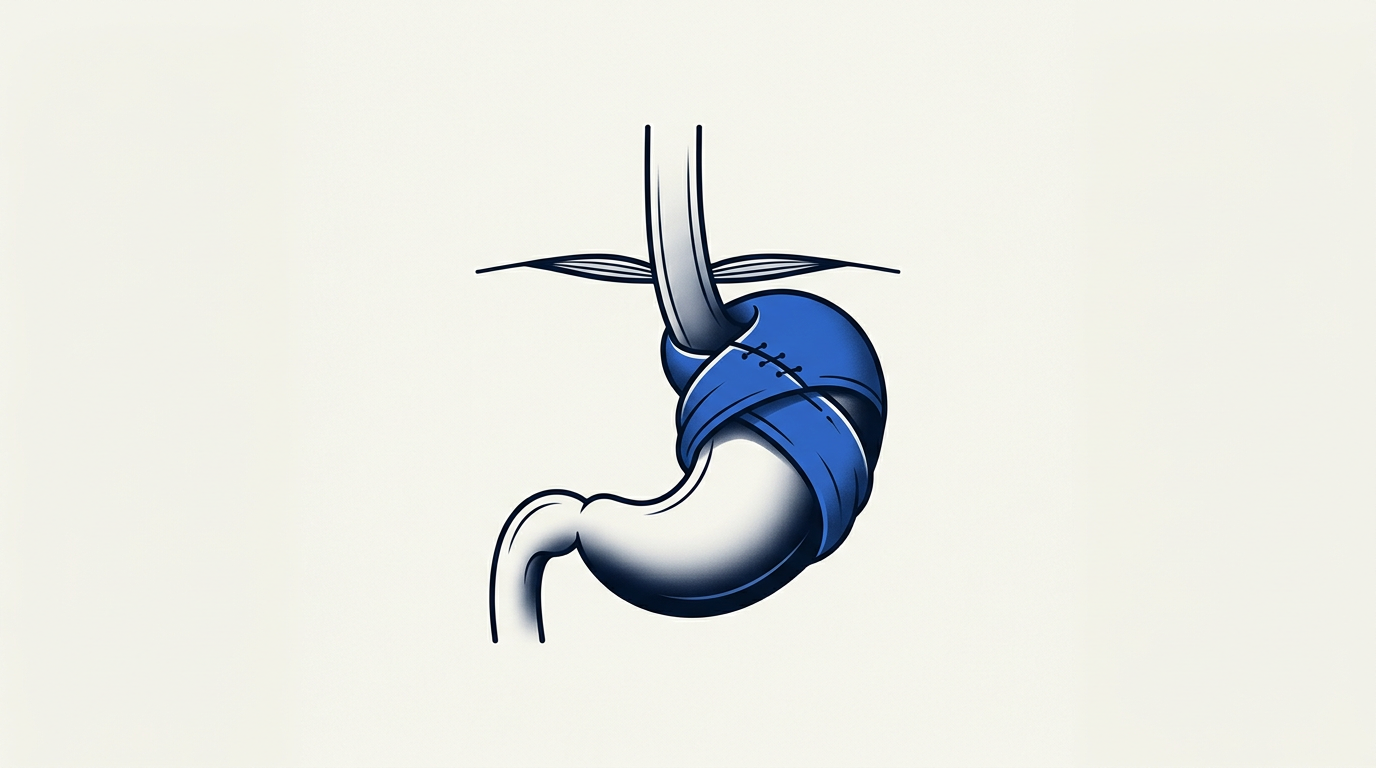
Fundoplication is an anti-reflux surgery that wraps the upper portion of the stomach around the lower esophagus to strengthen the valve between them. A Nissen fundoplication is a full 360-degree wrap, while a Toupet fundoplication is a partial 270-degree wrap. Both are proven surgical treatments for gastroesophageal reflux disease (GERD) when medications are no longer effective.

Nissen (full 360° wrap)Toupet (partial 270° wrap)Often performed laparoscopicallyReduces or eliminates reflux medication
Medical illustration of fundoplication showing the stomach wrapped around the lower esophagus to prevent acid reflux

Quick Guide

Purpose

Stop chronic acid reflux surgically

Types

Nissen (360°) or Toupet (270°)

Approach

Laparoscopic or robotic

Often Paired With

Hiatal hernia repair

Patient-First Note

The choice between a Nissen (full wrap) and Toupet (partial wrap) is based on your esophageal function, anatomy, and test results. Both procedures are designed to restore the natural barrier against acid reflux and reduce or eliminate the need for daily medication.

What It Does

Recreates a one-way valve

The top of the stomach (fundus) is wrapped around the lower esophagus and sutured in place, creating a physical barrier that prevents stomach acid from flowing back up.

Nissen

Full 360-degree wrap

A Nissen fundoplication wraps the stomach completely around the esophagus. It provides the strongest anti-reflux barrier and is the most widely studied fundoplication technique, with over 60 years of proven results.

Toupet

Partial 270-degree wrap

A Toupet fundoplication wraps the stomach approximately 270 degrees around the esophagus, leaving the front open. It may be preferred in patients with weaker esophageal motility, as it creates less resistance to swallowing while still providing effective reflux control.

Who It Helps

Patients with chronic GERD

Candidates typically have confirmed reflux that does not respond well to medication, patients who cannot tolerate long-term acid suppression, or those with a hiatal hernia contributing to symptoms.

Nissen vs. Toupet

How the right wrap is chosen

The decision between a Nissen and Toupet fundoplication is guided by pre-operative testing — particularly esophageal manometry, which measures the strength and coordination of esophageal contractions. pH testing and upper endoscopy also play a role.

Patients with normal esophageal motility are generally good candidates for a Nissen (full wrap). Patients with weaker or borderline motility may benefit from a Toupet (partial wrap), which provides effective reflux control with a lower risk of post-operative swallowing difficulty. Both procedures deliver durable long-term results.

Candidacy

When surgery may be recommended

Surgery is typically considered when acid reflux symptoms persist despite appropriate medication, when patients prefer not to take lifelong acid-suppressing drugs, or when complications like esophagitis or Barrett's esophagus develop.

A thorough evaluation including upper endoscopy, barium swallow study, pH monitoring, and esophageal manometry helps determine whether fundoplication is the right approach and which type of wrap is best for each patient.

Technique

How the procedure is performed

Both Nissen and Toupet fundoplications are most commonly performed laparoscopically through several small incisions in the upper abdomen. If a hiatal hernia is present, it is repaired at the same time.

The upper portion of the stomach is mobilized and wrapped around the lower esophagus — completely for a Nissen, or partially for a Toupet — and secured with sutures. This creates compression around the esophageal sphincter and prevents reflux.

How Care Is Planned

Treatment is based on your symptoms, exam, and the condition.

Medical Management

Continued medication and lifestyle changes

For patients whose reflux is well-controlled with medication and who do not wish to pursue surgery, ongoing medical management remains a reasonable option.

Nissen Fundoplication

Full wrap for maximum reflux control

The standard for patients with normal esophageal motility. Provides the strongest anti-reflux barrier. Performed laparoscopically with small incisions and typically a one to two night hospital stay.

Toupet Fundoplication

Partial wrap for balanced results

Preferred when esophageal motility is weaker or borderline. Provides effective reflux control with a lower risk of post-operative dysphagia (difficulty swallowing). Same minimally invasive approach and similar recovery.

Recovery Timeline

What recovery may look like.

Step 1

Before surgery

Pre-operative testing confirms reflux severity and esophageal function. This includes EGD, barium swallow study, pH study, and manometry. Results guide the choice between Nissen and Toupet.

Step 2

Procedure day

Laparoscopic fundoplication typically takes two to three hours. Most patients stay one night and discharge home the next day.

Step 3

Early recovery

A liquid diet progresses to soft foods over two to four weeks. Some patients experience temporary difficulty swallowing as swelling resolves. No heavy lifting over 20 lbs for 6 weeks following surgery.

Step 4

Long-term

Most patients see significant improvement in reflux symptoms and can reduce or stop acid-suppressing medication. Full dietary return typically occurs within six to eight weeks.

Common Questions

Answers patients often want before scheduling.

What is the difference between Nissen and Toupet?

A Nissen fundoplication is a full (360-degree) wrap of the stomach around the esophagus. A Toupet is a partial (270-degree) wrap. The Nissen provides a stronger anti-reflux barrier, while the Toupet may cause less difficulty swallowing. The choice depends on your esophageal function testing.

Will I still be able to eat normally after fundoplication?

Most patients return to a normal diet over time. Temporary dietary restrictions are standard during healing. Some patients find that very large meals or carbonated beverages feel different initially, but this often improves.

Can the wrap come undone?

In a small percentage of patients the wrap can loosen or migrate over time, which may allow reflux to return. Revision surgery is possible if this occurs.

How long until I can stop taking reflux medication?

Many patients can reduce or discontinue acid-suppressing medication within a few weeks to months after surgery, under their surgeon's guidance.

Is fundoplication permanent?

Fundoplication is designed as a long-term solution. Studies show durable results in the majority of properly selected patients over 10+ years for both Nissen and Toupet techniques.

Consultation

Talk through your symptoms and next steps.

Call our office to schedule an evaluation with Dr. Bayouth. This page is educational and should not replace personal medical advice.