AboutProceduresReviewsInsuranceFormsContactCall 817.922.9229

Procedure Guide

Inguinal Hernia Repair

An inguinal hernia happens when tissue, often part of the intestine or fatty tissue, pushes through a weak spot in the lower abdominal wall near the groin. The result is commonly a bulge, pressure, or pain that may worsen with lifting, coughing, or activity.

Common groin herniaOften causes a visible bulgePain may worsen with lifting or coughingCan be repaired with minimally invasive or open surgery
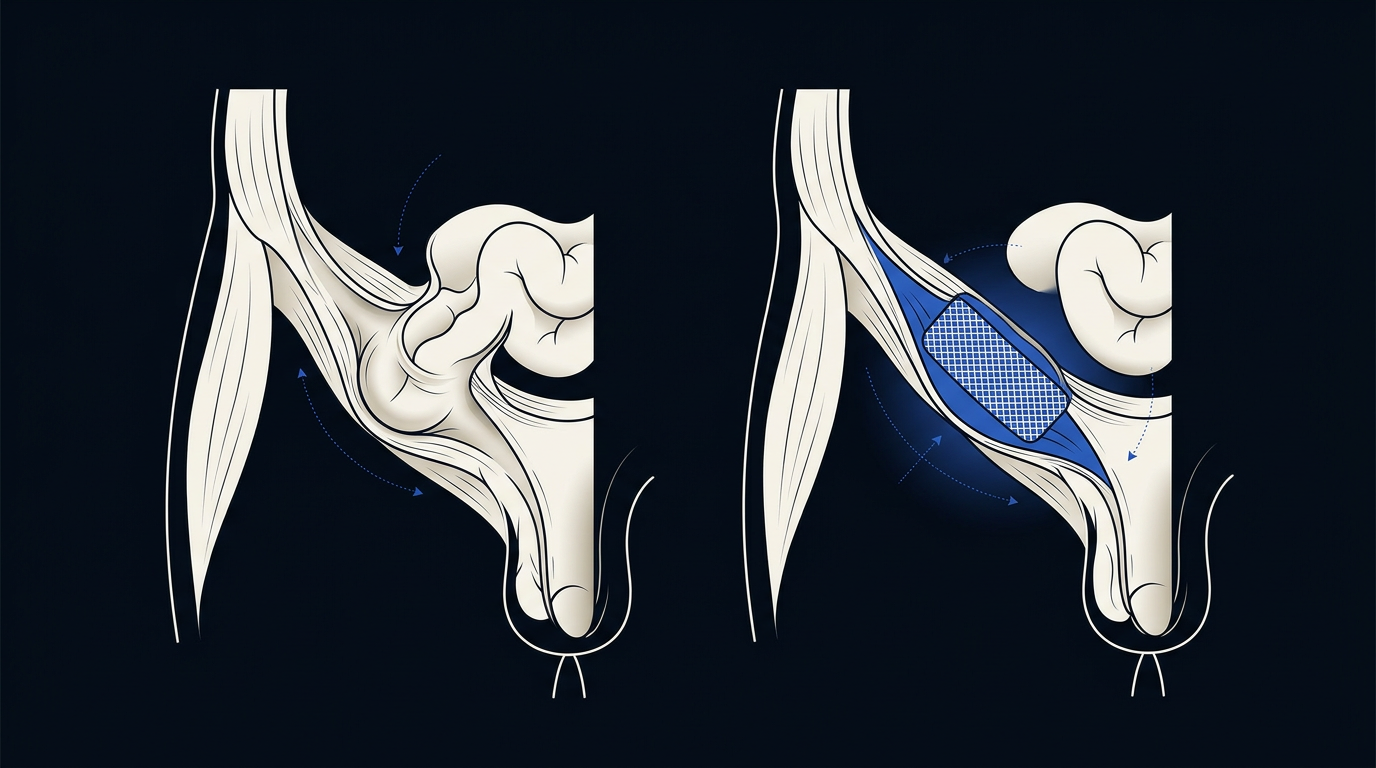
Medical illustration of inguinal hernia repair showing groin anatomy with tissue protruding through the abdominal wall and surgical mesh placement

Quick Guide

Location

Groin or lower abdominal wall

Typical Sign

Bulge that changes with standing or strain

Common Approaches

Laparoscopic, robotic, or open repair

When It Becomes Urgent

Sudden pain, nausea, or color change

Patient-First Note

Most hernias are treatable, and many repairs can be planned rather than rushed. The goal is to explain the problem clearly, identify warning signs, and help you understand when surgery may be recommended.

What It Is

A weak spot in the groin wall

Inguinal hernias develop when tissue presses through a weakened area near the inguinal canal. This often creates a bulge where the groin and thigh meet.

Who It Affects

More common in men, but not limited to men

Inguinal hernias are especially common in men because of a natural area of weakness in the groin, but women, teenagers, and children can develop them too.

How It Feels

Pressure, aching, or activity-related pain

Symptoms often become more noticeable with lifting, bending, coughing, or standing for long periods. Some patients mainly notice a bulge before pain appears.

Why Repair Matters

Untreated hernias can become complicated

Some hernias remain stable for a time, but others enlarge or trap tissue. When the blood supply becomes compromised, the condition can turn into a surgical emergency.

Symptoms

What patients usually notice first

The most common sign is a bulge in the groin that may appear when you stand, strain, cough, or lift something heavy. Many patients notice that the bulge gets smaller or disappears when they lie down.

Pain is often described as pressure, burning, soreness, or a pulling sensation. For some people the discomfort is mild at first but becomes more noticeable with activity or over time.

  • Bulge near the groin crease
  • Pain with lifting, bending, or coughing
  • Feeling of heaviness or pressure
  • Symptoms that improve when lying flat

Types

Direct and indirect inguinal hernias

Inguinal hernias are generally described as direct or indirect. A direct hernia pushes through a weak point in the abdominal wall, while an indirect hernia passes into the inguinal canal.

That anatomy matters for the surgeon, but for patients the bigger question is whether the hernia is causing symptoms, changing in size, or showing signs that it needs repair.

Evaluation

How inguinal hernias are diagnosed

Many inguinal hernias are diagnosed during a physical examination. Your surgeon may ask you to stand, cough, or strain gently so the bulge can be assessed more clearly.

If the diagnosis is less obvious or the exam is limited, imaging may be considered. The exact workup depends on your symptoms, anatomy, and whether there is concern for complications.

How Care Is Planned

Treatment is based on your symptoms, exam, and the condition.

Observation

Monitoring may be reasonable in selected cases

If symptoms are minimal, a surgeon may discuss watching the hernia and monitoring for changes. The decision depends on pain level, hernia size, daily limitations, and overall risk.

Minimally Invasive Repair

Laparoscopic or robotic surgery for many patients

Some inguinal hernias can be repaired through small incisions using minimally invasive techniques. Mesh is commonly used to reinforce the weakness and lower the chance of recurrence.

Open Repair

Sometimes open surgery is the best option

Open repair may be recommended based on the size of the hernia, prior operations, anatomy, or when tissue extends farther down into the groin or scrotum. Recovery can be longer in some cases.

Recovery Timeline

What recovery may look like.

Step 1

Before surgery

Your consultation focuses on confirming the diagnosis, reviewing symptoms, discussing the surgical approach, and explaining the expected recovery plan.

Step 2

Procedure day

Most patients want to know what to expect, what kind of repair is planned, and when they can safely return home. Specific instructions depend on the approach and your health history.

Step 3

Early recovery

Mild soreness, activity restrictions, and gradual return to normal movement are common topics after surgery. Many patients recover faster after minimally invasive repair than after larger open repairs.

Step 4

Return to activity

Timeline varies by patient and procedure. No heavy lifting over 20 lbs for 6 weeks following surgery. Your surgeon will give personalized guidance based on your specific repair.

Common Questions

Answers patients often want before scheduling.

Does every inguinal hernia need surgery right away?

Not always. Some hernias can be monitored for a period of time, especially if symptoms are mild. Surgery becomes more important when the hernia causes pain, limits activity, grows, or shows warning signs of complication.

What makes an inguinal hernia dangerous?

The main concern is that tissue can become trapped and lose its blood supply. This can cause severe pain, nausea, vomiting, bowel obstruction symptoms, or color change in the bulge and requires urgent medical evaluation.

What is mesh used for in hernia surgery?

Mesh is commonly used to reinforce the weak area in the abdominal wall after the hernia is repaired. It helps support the repair and may reduce the risk of recurrence in many patients.

How long is recovery after inguinal hernia repair?

Recovery depends on the size of the hernia, the surgical approach, and the type of activity you need to return to. Many patients resume light activity relatively quickly, while heavy lifting may require a longer restriction period.

Consultation

Talk through your symptoms and next steps.

Call our office to schedule an evaluation with Dr. Bayouth. This page is educational and should not replace personal medical advice.